

Archivio Crepax
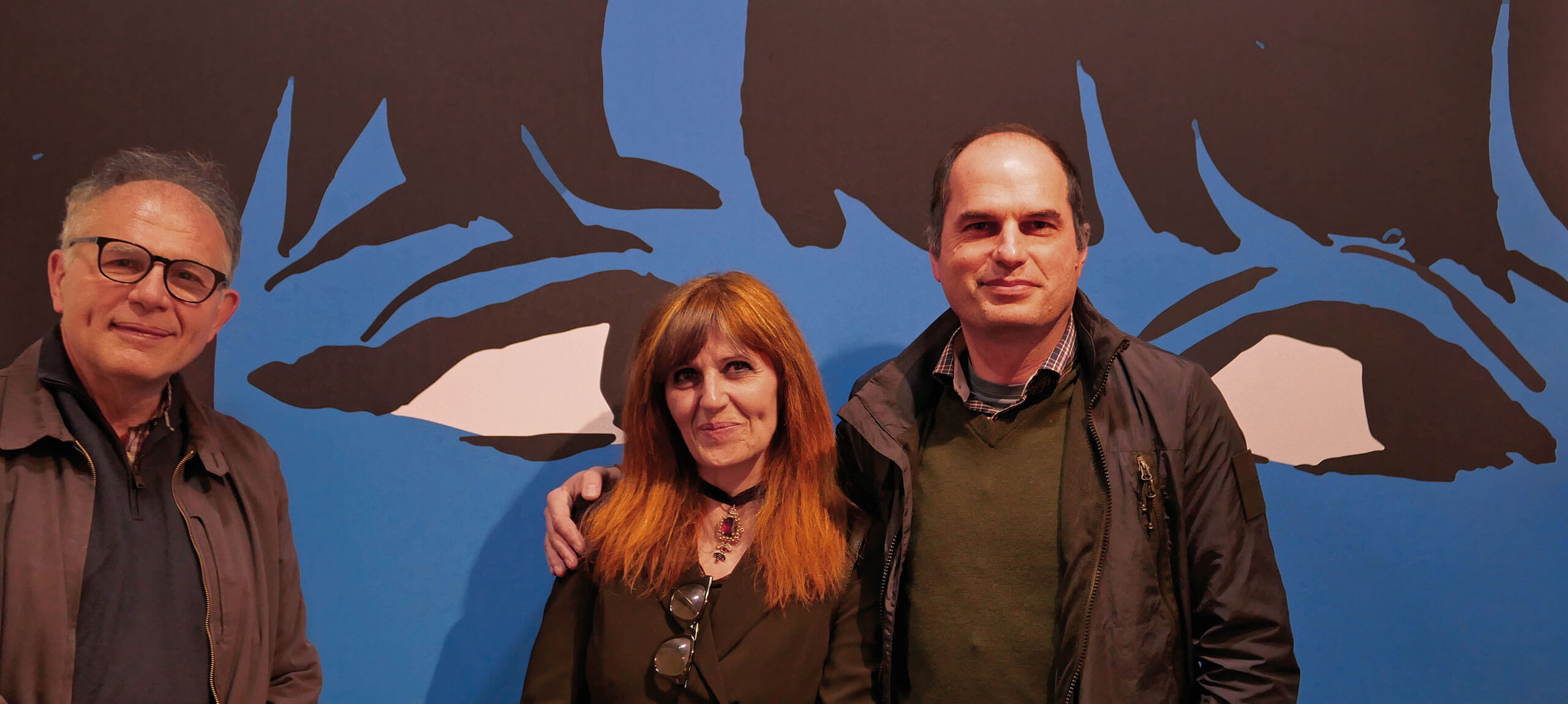

Founded by the heirs of Guido Crepax following the artist’s passing (Milan, 31 July 2003), Archivio Crepax safeguards, manages and promotes the rich body of images and ideas born from the creator of Valentina. Bringing together expertise in design, communication and set design, his children — Antonio, Caterina and Giacomo — have embraced and carried forward their father’s cultural legacy.
Exhibitions and events, new editions in Italy and abroad, design objects, licensing activities and a variety of other projects are all developed in full respect of the original work — a testament to the enduring relevance and inventive spirit of the artist’s creations.
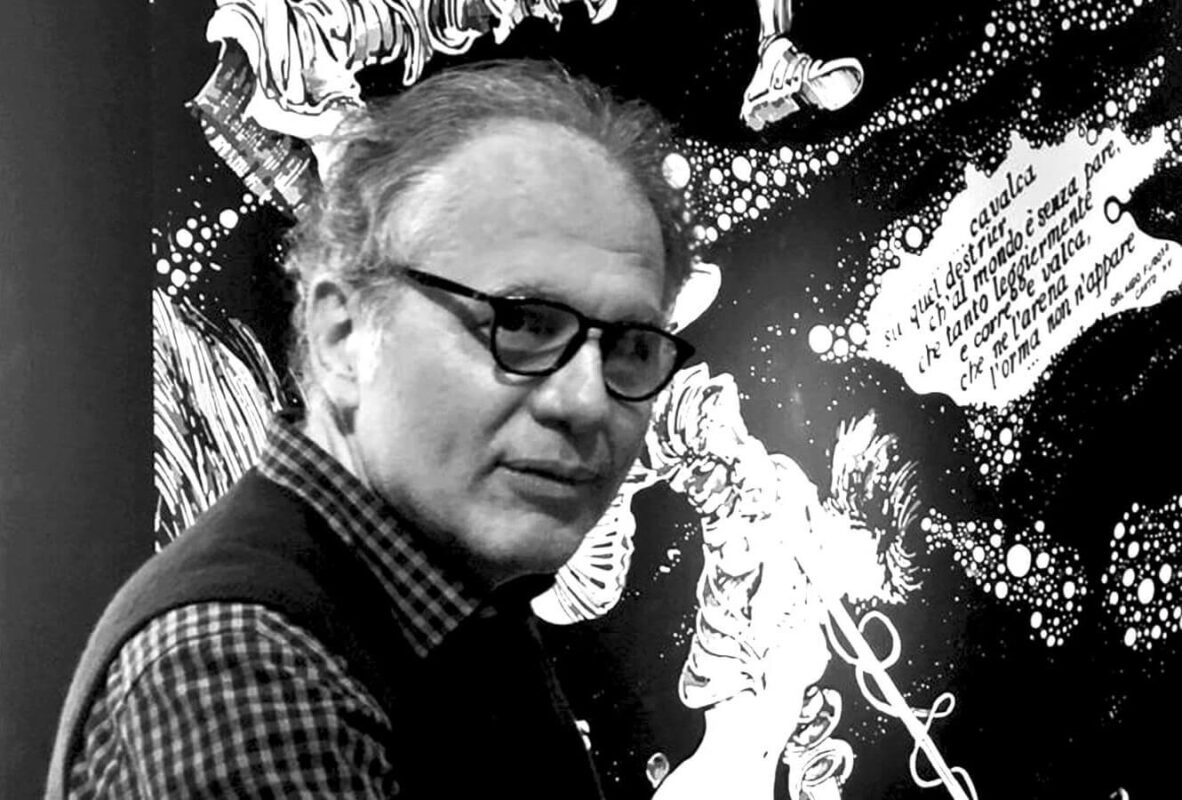
Born in Milan on 1 November 1961, I graduated in Law in 1986 with a dissertation in Clinical Criminology on Judicial Psychiatric Hospitals. Disappointed by the results of the judiciary entrance exam, I decided to change direction and devote myself to what I did best: writing. Between 1990 and 2010, I worked as a journalist for several publications and gained extensive experience in the field of communication and public relations (Weber Shandwick, Edelman and Euro RSCG groups), as a copywriter and communications consultant specialising in crisis management, litigation PR, communication strategies, and the drafting of texts in the fields of environment, energy, services, finance and consumer goods. As a freelancer, I have also worked as a web content author, ghostwriter, and lecturer at the Sole 24 Ore Business School.
Since 2003, following the death of our father, Guido Crepax, I have also been involved in managing his artistic legacy — devising exhibitions and digital projects, and overseeing licensing and book editions in Italy and abroad. Since 2010, I have been carrying out this work full-time with my sister Caterina and my brother Giacomo, with whom I co-founded the company Archivio Crepax, where I serve as President. Drawing on my background and previous experience, I handle all legal aspects and the editorial content of our activities: the writing and structure of books, the conception and development of exhibitions and events, as well as the complex management of relationships with our partners and collaborators.
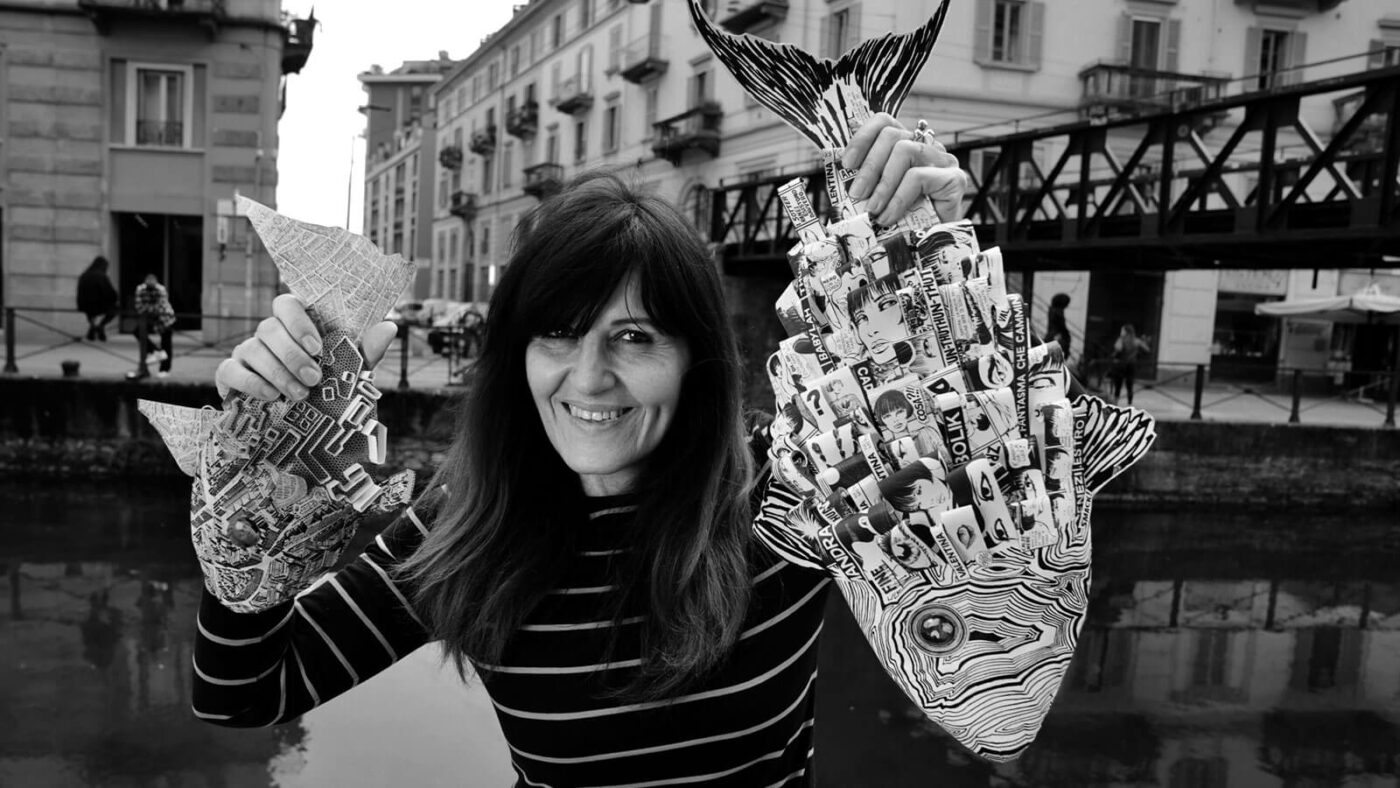
Born in Milan on 26 February 1964, after completing classical studies I graduated in Architecture from the Polytechnic University of Milan in 1989, with a thesis in Architectural Design. I immediately began working with architects Marco Comolli and Giovanna Poli, designing interiors and bespoke furnishings for Italian and international clients for over fifteen years.
At the same time, I collaborated with creative director Gherardo Frassa on more scenographic projects — large-scale wall installations, silhouettes and pop-inspired inventions — created to enhance the spectacular nature of exhibitions and events. Together with him, I curated the first exhibitions dedicated to our father’s comics.
In 1995, I made my debut as a paper artist when designer Nicola Gallizia commissioned me to create paper garments for Molteni at the Salone Internazionale del Mobile. Since then, this has become my principal artistic pursuit, thanks to my distinctive way of sculpting paper. Today, many companies, fashion designers, and both public and private institutions commission me to design dreamlike events and fashion shows where paper — even the most ordinary kind — is transformed into a precious, fabric-like material.
Among my most prestigious collaborations are Roberto Cavalli, Fendi, Valentino, São Paulo Fashion Week, Patek Philippe and Turisanda. My works have also been exhibited at Homo Faber, Triennale Milano and the Museo della Scala. I have always delighted in inventing ways to bring my father’s comics into three dimensions — from miniature paper theatres to dioramas created for exhibitions.
Within Archivio Crepax, which I co-founded with my brothers and where I serve as Vice President, I am primarily responsible for managing and developing the immense visual heritage left to us by our father, Guido Crepax. My work involves the careful selection of thousands of drawings to create new book editions, exhibition scenographies, and to apply the imagery to objects of design and merchandising.
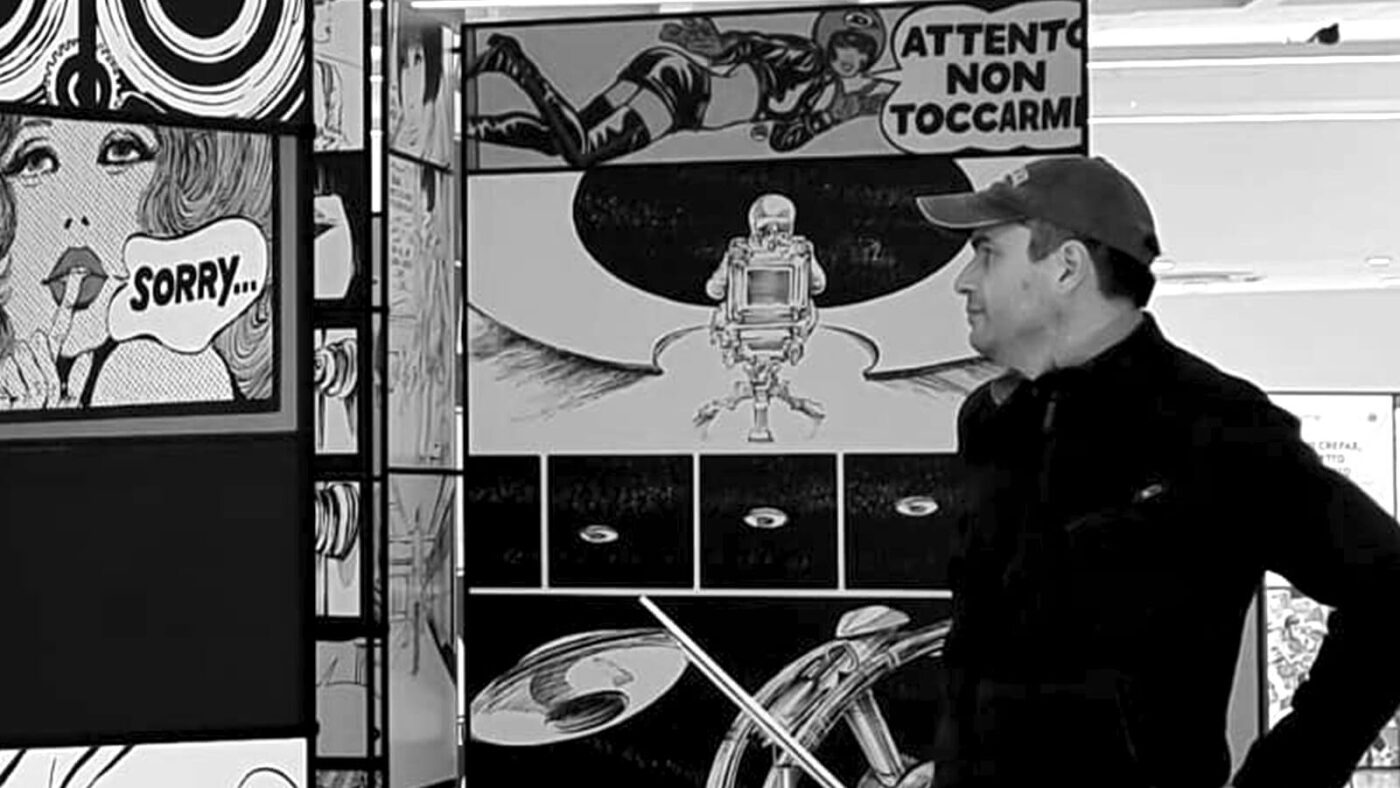
Born in Milan on 16 April 1970, after graduating from a scientific secondary school, I chose to continue a family tradition by enrolling in the Faculty of Architecture at the Polytechnic University of Milan, specialising in Architectural Design. My degree thesis focused on the conversion of the San Vittore prison, anticipating my enduring interest in the transformation of places with a strong symbolic identity.
My career began in the mid-1990s with a long and formative collaboration with architect Stefano Valabrega, during which I specialised in the redevelopment of industrial areas. Over those years, I developed a deep interest in industrial design and in the use of materials such as iron and concrete — elements that continue to define my architectural language today.
In 2016, together with Valabrega, I co-signed the project for the Giardino dei Giusti in Milan — a symbolic intervention that marked the beginning of a new phase in my professional journey.
In the following years, I established a stable partnership with Studio Gilardoni Fontana, sharing a design vision grounded in the balance between contemporary architecture, historical memory, and the urban context. Together, we have developed projects of international and institutional scope, including the United Nations Pavilion for the International Exhibition “Inequalities” at Triennale Milano (2025), co-signed with architect Giulia Fontana.
In parallel, I direct Archivio Crepax with my siblings — an institution dedicated to preserving and promoting the work of our father, Guido Crepax. Within this context, I oversee the design of exhibitions and installations, exploring an exhibition language that blends space, art, and visual storytelling.
In the publishing field, Archivio Crepax has curated and continues to oversee numerous editorial projects both in Italy and abroad.
In Italy, several collections of Crepax’s works have been released as supplements to major national newspapers: two pocket series with la Repubblica; the complete Valentina stories in 18 volumes with Corriere della Sera (2007); the Complete Works of Crepax, published by Mondadori in 30 volumes (2015); and a new series of stories — some coloured by the Archivio — issued by la Repubblica in 20 volumes (2018). Between 2010 and 2012, The Best of Valentina was also published by Magazzini Salani in a special edition annotated by Antonio and Luisa Crepax.
Since 2003, eleven public exhibitions of Crepax’s work have been accompanied by as many catalogues dedicated to the artist, several of which were entirely curated by the Archivio. Among the special projects, notable titles include Bonne Nuit (2012), a book accompanying a CD of lullabies; Inedito (2014), a collection of Crepax’s final illustrated stories; Viva Valentina (2015), featuring five short stories drawn by other comic artists; Valentina Colouring Book (2016); Lanterna magica (2018), a special limited edition published by Skira; and Crepax a 33 giri (2020), a catalogue of more than 300 record sleeves designed by the artist.
After a long period without a reference publisher, in 2024 Feltrinelli began reissuing Crepax’s works in an elegant Ultimate Edition, while also launching new adventures of Valentina, now set in the present day and illustrated by Sergio Gerasi, Comic-book artist and illustrator of several Dylan Dog stories.
Feltrinelli — Guido Crepax
On the international scene, Crepax’s comic stories have continued to be published even after his death.
In France, Dargaud has released four volumes featuring major Valentina stories in colour editions curated by Archivio Crepax (Dargaud — Guido Crepax), while Delcourt publishes his complete erotic works (Delcourt — Guido Crepax).
In the United States, Fantagraphics has been publishing since 2015 an acclaimed 12-volume collection of Crepax’s complete works (Fantagraphics — Guido Crepax).
In Brazil, following editions by Conrad Editora and L&PM, Pipoca & Nanquim is releasing a wide selection of Crepax’s stories in four anthological volumes (Pipoca & Nanquim — Guido Crepax).
In Spain, Norma Editorial published The Best of Valentina between 2008 and 2015 (Norma Editorial — Guido Crepax).
In Germany, after Avant Verlag published Valentina and Bianca stories, Splitter Verlag launched a series devoted to Crepax’s comic adaptations of literary classics (Splitter Verlag — Guido Crepax).
His Story of O (Histoire d’O) remains his most widely translated book, having reached South Korea in 2016. New editions of Crepax’s stories have also recently been published in countries where his work had never appeared before — including Serbia, Poland, the Czech Republic and Mexico. In 2025, Danish publisher Saga Egmont acquired the rights to release part of Crepax’s oeuvre in e-book format.